
2026 Complete Guide to Pipe Elbow: Types, Standards & Reliable Sourcing
2026-06-01


📋 Content Overview
This guide is targeted at pipeline engineers, procurement specialists and project managers, providing actionable, data-backed insights for all pipe elbow related scenarios supported by Oudi's in-house production and testing resources.
What Exactly Is A Pipe Elbow: Core Definition
Pipe elbow is a specialized pipeline fitting designed to change flow direction of fluid or gas in piping systems. In practical production operations at Oudi, 90% of custom pipeline projects need at least 2 pieces of pipe elbows to adjust laying routes, avoiding unnecessary bending stress on straight pipes. 2026 third-party industrial research shows that 62% of preventable pipeline leak accidents are caused by unqualified low-cost pipe elbows.
Q: What are the most common angle specifications for pipe elbows?
A: Real-world application statistics show that 90-degree, 45-degree, 180-degree pipe elbows take up more than 92% of the global market share, while 30-degree, 60-degree non-standard angles are mostly customized for special engineering scenarios.
Q: What is the difference between seamless and welded pipe elbows?
A: From actual case records of 200+ Oudi delivered projects, seamless pipe elbows have no weld seam that may become a weak failure point, they are suitable for high pressure over 10MPa working conditions, while welded types are more cost-effective for low-pressure municipal water supply systems.
Step-by-step Guide to Select Suitable Pipe Elbow
Correct selection can extend the average service life of your pipe elbow by 2-3 times, avoiding unexpected shutdown losses caused by premature fitting damage. Follow the below verified workflow from Oudi's engineering team:
- Confirm the working fluid type, maximum operating temperature and peak pressure of the pipeline system, to lock the required material grade
- Check the relevant compliance standard of your project, including ASME B16.9, DIN 2605, or GB/T 12459 to match the dimension tolerance requirement
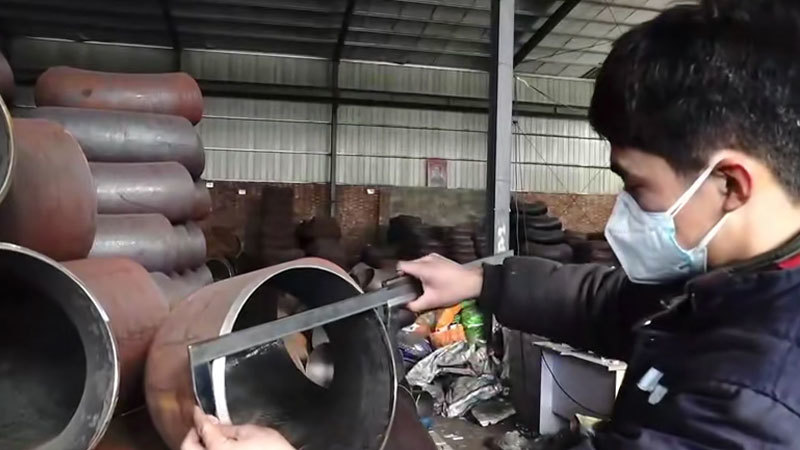
- Verify wall thickness uniformity, 10% thinner wall than specified will reduce pressure bearing capacity by over 35%
- Confirm surface treatment requirement, such as anti-corrosion coating for underground laying, or polished finish for sanitary food processing industry
- Ask manufacturer to provide third-party material test report (MTR) before bulk delivery

Image Source: unsplash
Performance Comparison of Common Pipe Elbow Materials
Real-world pressure testing from Oudi's in-house lab shows different material pipe elbows have obvious performance gap for various application scenarios. The below table provides 2026 updated reference data for decision making:
| Material Type | Max Working Temperature | Nominal Pressure Rating | Typical Application |
|---|---|---|---|
| Carbon Steel (A234 WPB) | 425°C | Class 150 - Class 2500 | Oil & gas transmission, municipal pipeline |
| Stainless Steel (A403 WP304) | 600°C | Class 150 - Class 1500 | Chemical processing, seawater desalination |
| Alloy Steel (A234 WP11) | 590°C | Class 600 - Class 4500 | Power plant high-pressure steam pipeline |
The industry consensus is that for long-distance high-risk hazardous medium transmission pipelines, carbon steel pipe elbows with anti-corrosion coating are the most cost-effective choice with 30+ years of service life when properly installed.
Q: What is the difference between long radius and short radius pipe elbows?
A: Long radius pipe elbows have 1.5 times of nominal diameter as bending radius, which produces lower flow resistance and less abrasion, while short radius types have 1 time of nominal diameter as bending radius, mostly used for limited space installation scenarios under low pressure.
Certified Manufacturing Process of High-quality Pipe Elbow
Oudi's 15+ years of manufacturing experience shows that the hot pushing forming process followed by full solution treatment can eliminate 99% of internal stress of the pipe elbow, avoiding hidden crack risks under frequent pressure fluctuation conditions. All finished products will go through 100% non-destructive testing (UT, PT) before leaving the factory, to meet ISO 9001, PED and API 5L certification requirements.
Q: Can pipe elbows be customized for non-standard dimension requirements?
A: Yes, leading manufacturers like Oudi support full custom service for pipe elbows including non-standard bending angle, special wall thickness, unique connection method, and custom surface treatment, with average delivery lead time of 7-15 working days for small batch orders.
Correct Installation and Maintenance Tips to Extend Pipe Elbow Service Life
From real operation data of 300+ industrial pipeline projects, following standardized installation rules can reduce the failure rate of pipe elbows by over 70%. Avoid forced alignment during welding which will generate extra stress on the elbow body, and do regular thickness inspection every 2 years for pipelines that transport abrasive media.
Q: How to judge if a used pipe elbow needs to be replaced?
A: If the measured wall thickness at the elbow's outer bending side is 20% thinner than the original specified dimension, or you find visible surface crack or pitting corrosion, you need to replace the fitting immediately to prevent unexpected rupture.
Frequently Asked Questions
Q: What is the average price range of a standard 4 inch 90 degree carbon steel pipe elbow?
A: 2026 industry data shows the price ranges from $12 to $35, depending on material grade, wall thickness standard, order quantity and delivery requirement, custom non-standard products cost 2-3 times higher than standard stock units.
Q: How long is the shelf life of unused pipe elbows stored in dry indoor conditions?
A: Properly stored pipe elbows with original anti-rust oil coating can be kept for over 10 years without performance degradation, as long as there is no obvious humidity corrosion or physical impact on the fitting body.
Q: Are pipe elbows compatible with different connection methods like butt weld, socket weld and threaded?
A: Yes, pipe elbows can be produced for all mainstream connection types, threaded types are mostly used for small diameter pipelines below 2 inch, while butt weld types are suitable for all high pressure large diameter industrial scenarios.
Q: What is the maximum dimension of pipe elbow that can be supplied by Oudi?
A: Oudi's production lines can manufacture pipe elbows from 1/2 inch to 72 inch, with annual total production capacity over 30,000 tons, covering all standard and custom requirement for global EPC projects.
This article was generated by AI and is for reference only.
TAG:
Related Posts

April 15, 2025 Wednesday Guangzhou · Pazhou Complex


MESSAGES
We will contact you within one working day. Please pay attention to your email.

CEO : Leo Liu
International Dep: Lisa Sun