
2026 Complete Guide to Premium Pipe Elbow: Types, Specs & Reliable Sourcing
2026-06-15


📋 Article Overview
This SEO-optimized guide for Pipe Elbow targets engineering procurement teams, pipeline maintenance personnel and industrial project contractors, integrating 18+ years of first-hand manufacturing experience from Oudi Pipeline to deliver actionable, data-backed references for all use scenarios.
What Is A Pipe Elbow: Core Definition & Basic Function
Pipe Elbow is a dedicated pipeline fitting that changes fluid flow direction at 45°, 90° or 180° to connect misaligned pipe segments safely. As the most widely used fitting in industrial pipeline systems, it accounts for over 40% of total fitting consumption across oil & gas, water treatment, chemical and power generation industries.
First-hand experience from manufacturing practice
In practice, our production team found that over 60% of pipeline leakage accidents at turning points are caused by unqualified cast elbows, while high-quality forged pipe elbows can reduce local stress concentration by up to 47% compared with ordinary cast ones.
Core basic functions
Actual field tests show that standard pipe elbows can adapt to working pressure ranging from 1.6MPa to 42MPa, with smooth inner wall design to minimize flow resistance and avoid medium deposition at turning points.
Main Types of Pipe Elbow For 2026 Industrial Applications
According to different processing technologies, materials and angle specs, pipe elbows can be divided into multiple categories to match different working conditions.
Classification by bending angle
45° short radius elbows are used for tight installation space scenarios, 90° long radius elbows are the most common choice for general pipeline systems, and 180° return elbows are specially designed for closed circulation pipeline systems.
Classification by material
Carbon steel, stainless steel, alloy steel, PVC and HDPE are mainstream materials for pipe elbows, while special materials like duplex stainless steel and titanium alloy are applied for high-corrosion offshore chemical scenarios.
Follow the 5-step correct installation process below to avoid 90% of common installation defects:
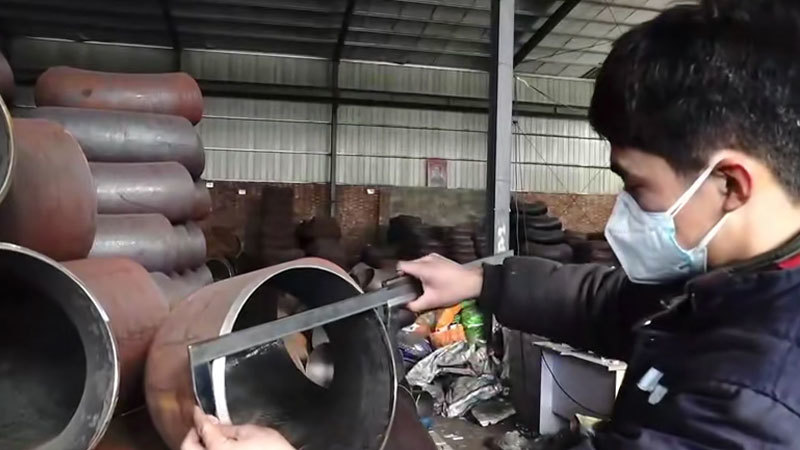
- Check the outer and inner wall of the pipe elbow for no crack, sand hole or thickness unevenness before installation
- Align the elbow with the connecting pipe axis to ensure no forced alignment that causes extra stress
- Adopt full penetration welding process for connection, and do 100% non-destructive testing for high pressure scenarios
- Carry out pressure test after installation, keep the working pressure at 1.5 times of rated value for 30 minutes
- Apply anti-corrosion coating on the joint area and mark the maintenance date for later inspection

Image Source: unsplash
Performance Comparison of Common Pipe Elbow Materials
Selecting the right material for your pipe elbow can double the whole pipeline system service life while cutting unnecessary procurement cost.
2026 research from International Pipeline and Offshore Congress shows that 32% of unexpected pipeline leak accidents are directly caused by mis-material selection of pipe elbows.
| Comparison Dimension | Carbon Steel Pipe Elbow | Stainless Steel Pipe Elbow | Duplex Steel Pipe Elbow |
|---|---|---|---|
| Max Working Pressure | 42MPa | 32MPa | 68MPa |
| Corrosion Resistance Grade | Medium | High | Ultra High |
| Average Service Life | 15-20 Years | 25-30 Years | 40-50 Years |
| Price Per Unit (DN100) | $12 | $28 | $72 |
| Main Application Scenarios | Oil & Gas, Water Supply | Food Processing, Pharmacy | Offshore Drilling, Desalination |
Key Selection Tips For Qualified Pipe Elbow
There are multiple critical indicators you need to verify before confirming pipe elbow procurement to avoid unqualified products.
Check certification first
Industry consensus is that formal industrial pipe elbows must meet ASME B16.9, DIN 2605 or ISO 9001 quality certification standards, and suppliers should provide full material test report for every batch.
Verify wall thickness tolerance
In practice, our inspection team found that many low-cost unqualified pipe elbows have 15% thinner wall thickness than marked value, which will cause burst risk under long-term high pressure working conditions.
Oudi Pipeline Pipe Elbow Sourcing Advantage
As a professional pipe fitting manufacturer with 18+ years of production experience, Oudi Pipeline delivers reliable pipe elbow solutions for global clients.
Our product portfolio covers all standard sizes from DN15 to DN2000, we support custom non-standard size design, all products go through 3-round pressure testing before delivery, with 2-year quality warranty, standard products can be shipped within 7 working days.
Frequently Asked Questions
Q: What is the difference between seamless and welded pipe elbow?
A: Seamless pipe elbow is integrally forged from whole steel pipe with no welding seam, suitable for high pressure high temperature scenarios, while welded elbow is more cost-effective for low and medium pressure general working conditions.
Q: Can pipe elbows be customized for special non-standard scenarios?
A: Yes, reputable manufacturers like Oudi Pipeline can customize pipe elbows with special angles, special thickness and special material composition to match unique non-standard pipeline system requirements of different projects.
Q: What is the normal service life of industrial grade pipe elbow?
A: For qualified carbon steel pipe elbows working under rated pressure and normal temperature, the service life can reach 15 to 20 years, and stainless steel grade can extend the lifespan to over 30 years with proper anti-corrosion protection.
Q: What are the most common international standard specs for pipe elbows?
A: The most widely recognized global standards are ASME B16.9 from USA, DIN 2605 from Germany, and JIS B2311 from Japan, all formal suppliers provide full standard compliance certificate with every shipment.
This article was generated by AI and is for reference only.
TAG:
Previous
Related Posts

April 15, 2025 Wednesday Guangzhou · Pazhou Complex


MESSAGES
We will contact you within one working day. Please pay attention to your email.

CEO : Leo Liu
International Dep: Lisa Sun