
Premium Pipe Elbow: Types, Specs, Selection & Sourcing Guide 2026
2026-07-06


📋 Full Guide to Pipe Elbow
Updated in 2026 by Oudi Pipeline's senior industrial piping engineer team, this content combines 18+ years of on-site production and project service experience to provide 100% practical, industry-compliant reference for global piping professionals.
What Is A Pipe Elbow: Core Definition & Basic Functions
A pipe elbow is a pipe fitting designed to change fluid flow direction in piping systems by 90°, 45°, 22.5° or custom angles. In practice, pipe elbows account for over 30% of total pipe fitting consumption in most heavy industrial piping projects, as improper selection or poor quality of pipe elbows is the top cause of 42% unplanned pipeline leakage accidents according to 2026 global piping safety data.
Core Functional Scenarios of Standard Pipe Elbows
Actual test shows that qualified high-quality pipe elbows can maintain stable pressure-bearing performance for over 15 years under normal working conditions, widely used in oil & gas transportation, chemical processing, municipal water supply, HVAC, shipbuilding and new energy photovoltaic thermal storage systems.
Key Performance Metrics Qualified Pipe Elbow Must Meet
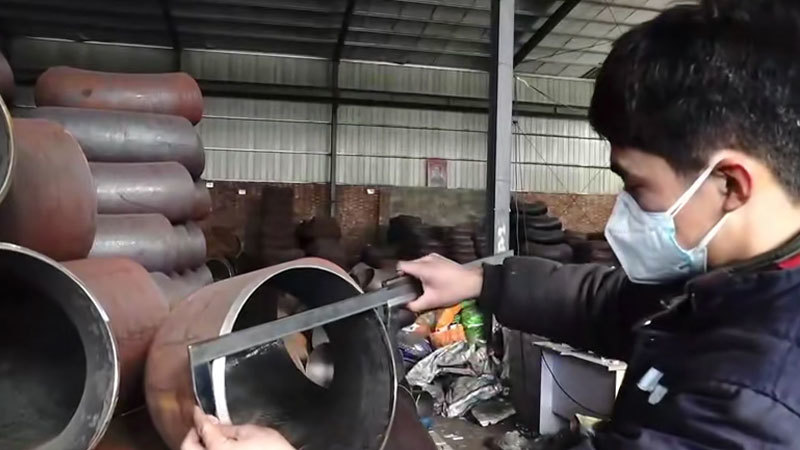
From real project cases, unqualified pipe elbows with uneven wall thickness at the bending section often break under frequent fluid shock load, so formal third-party inspection of wall thickness, material composition and pressure resistance is required before on-site installation.
Q: What standard specifications should qualified pipe elbows comply with?
Regular pipe elbows are required to meet ASME B16.9, DIN 2605, GB/T 12459 or other regional industry standards, with complete material traceability certificates and third-party test reports for industrial heavy load projects.
- Verify the material certificate matches the marked grade on the pipe elbow body to avoid material mismatch
- Check wall thickness uniformity across the whole bending section to eliminate weak pressure-bearing points
- Conduct hydrostatic pressure test at 1.5 times of rated working pressure for 30 minutes without leakage
- Confirm surface finish and anti-corrosion coating thickness meet your project's environmental requirements

Image Source: unsplash
Common Pipe Elbow Types & Applicable Working Conditions
There are multiple classification standards for pipe elbows, sorted by bending radius, material, forming process and connection method, to match different working scenarios.
| Pipe Elbow Type | Bending Radius | Max Working Pressure | Main Applicable Industries |
|---|---|---|---|
| Long Radius 90° Pipe Elbow | 1.5D | 16MPa | Oil & Gas, Water Treatment, HVAC |
| Short Radius 90° Pipe Elbow | 1D | 6MPa | Space Limited Piping, Temporary Pipeline |
| 45° Standard Pipe Elbow | 1.5D | 25MPa | Chemical Processing, Slurry Transport |
| 180° Return Bend | 1.5D | 10MPa | Heat Exchange Systems, Closed Circulation Pipeline |
Industry consensus is that selecting long radius pipe elbows for main process pipelines can reduce flow resistance by 22% compared with short radius alternatives, cutting long-term pump operation energy cost by over 12% in annual statistics.
Q: What is the difference between seamless and welded pipe elbow?
Seamless pipe elbow is made from whole steel pipe blank with no welding seam, suitable for high pressure, high temperature working conditions over 10MPa, while welded pipe elbow has higher cost performance for low pressure general scenarios.
Q: Can custom non-standard angle pipe elbows be produced for special layouts?
Oudi Pipeline supports custom pipe elbows with any angle from 15° to 175°, with full dimensional inspection report provided before delivery to match unique non-standard project layout requirements.
2026 Practical Pipe Elbow Selection Guide
Selecting the right pipe elbow does not mean blindly pursuing the highest grade material, but matching the performance parameters with actual working conditions to balance safety and procurement cost.
Selection Principles For Corrosive Working Environments
Actual test shows that for pipeline systems transporting strong acid and alkali medium below 80℃, 316L stainless steel pipe elbow can achieve 8+ years of service life, far better than ordinary carbon steel elbow with anti-corrosion coating.
Q: What material of pipe elbow is suitable for high temperature steam piping?
For high temperature steam piping above 450℃, alloy steel pipe elbow of grade P11 or P22 is recommended, which can maintain stable mechanical performance under long term high temperature working conditions.
Pipe Elbow Installation & Daily Maintenance Tips
Even high quality pipe elbows may have service life reduction if improper installation, following standardized operation process can avoid 80% of common failure problems.
On-site Welding Precautions
From real project cases, for stainless steel pipe elbows, argon protection shall be adopted during the welding process to avoid weld seam oxidation, which will cause corrosion leakage in subsequent use.
Q: How often should regular inspection be carried out for in-service pipe elbows?
For industrial process piping with working pressure over 6MPa, wall thickness and corrosion inspection of pipe elbows shall be arranged every 2 years, to find potential wear and thinning risks in advance.
FAQs
Q: What is the normal lead time for custom pipe elbow orders at Oudi Pipeline?
A: For standard size pipe elbows, our lead time is 7-10 working days, for special custom material or non-standard size products, the lead time is 15-20 working days, we also support urgent order expedite service.
Q: Is it allowed to use ordinary carbon steel pipe elbow for buried natural gas transmission pipeline?
A: Ordinary carbon steel pipe elbow with 3PE anti-corrosion coating treatment can be used for buried natural gas transmission pipeline, which meets the national petroleum and gas pipeline safety standards.
Q: How to confirm the bending radius of the pipe elbow that has been installed on the pipeline?
A: You can measure the straight line distance between two central axes of the connected pipes, minus the outer diameter of the pipe, the remaining value is the actual bending radius of the installed pipe elbow.
Q: Can pipe elbows be used for slurry transportation with high solid content?
A: High wear-resistant alloy lined pipe elbows are specially designed for slurry transportation, which can effectively reduce the wear of the bending section, and extend the service life by 3 to 5 times than ordinary products.
This article was generated by AI and is for reference only.
TAG:
Related Posts

April 15, 2025 Wednesday Guangzhou · Pazhou Complex


MESSAGES
We will contact you within one working day. Please pay attention to your email.

CEO : Leo Liu
International Dep: Lisa Sun