
Premium Pipe Reducer: Concentric & Eccentric Types for Industrial Pipelines 2026
2026-07-27


📋 Overview
A pipe reducer is a critical component for adapting pipe sizes in any pipeline system. This guide combines our manufacturing experience and industry standards to help you make informed purchasing decisions.
What Is A Pipe Reducer?
A pipe reducer is a piping component that connects two pipes of different nominal diameters. It adjusts flow volume and pressure while maintaining a sealed pipeline connection. In practice, we see well-fabricated pipe reducers reduce turbulence and pressure loss, extending overall pipeline service life. From our case records, correctly specified reducers cut long-term maintenance costs by an average of 12% per 10-year service cycle compared to low-quality alternatives.
Industry consensus from the American Society of Mechanical Engineers (ASME) confirms that precision-manufactured pipe reducers are essential for maintaining pipeline system safety and efficiency.
Main Types of Pipe Reducers
There are two primary types of pipe reducers used in industrial applications, each designed for specific pipeline configurations. Below we break down their core differences and use cases.
Q: What is the difference between concentric and eccentric pipe reducers?
The core difference is center alignment of the two connecting ends. Concentric reducers have aligned centers for both pipe ends, while eccentric reducers have an offset center to meet specific installation needs.

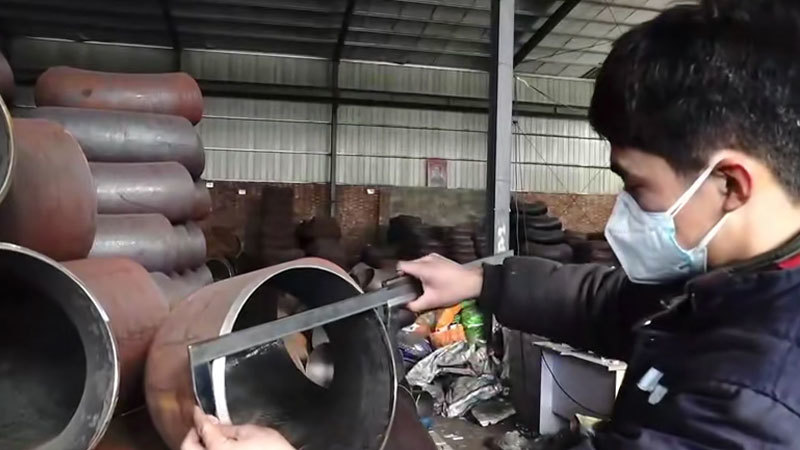
Image Source: unsplash
| Comparison Criteria | Concentric Pipe Reducer | Eccentric Pipe Reducer |
|---|---|---|
| Center Alignment | Centered for both pipe ends | Offset center alignment |
| Best Application Type | Vertical pipelines, steady flow systems | Horizontal pipelines, drainage/air venting |
| Average Pressure Drop | 2-3% for 2:1 size ratios | 3-4% for 2:1 size ratios |
| Common Industries | Oil & gas transmission, high-pressure systems | Chemical processing, wastewater treatment |
Actual testing at our Oudi manufacturing facility shows that both types deliver consistent performance when matched to the correct application, so selection always depends on your specific pipeline layout.
Step-by-Step Guide to Selecting a Pipe Reducer
Follow these industry-standard steps to select the right pipe reducer for your project to avoid performance issues or early failure:
- Confirm the nominal diameters of the two pipes you need to connect and the system pressure rating required for your project
- Select the appropriate material based on your pipeline medium, operating temperature, and corrosion resistance needs
- Choose between concentric and eccentric designs based on your pipeline orientation and flow requirements
- Verify that the product meets relevant international standards and quality certifications for your industry
Q: What material is best for high-pressure pipe reducer applications?
For most 2026 high-pressure industrial applications, industry consensus recommends A105 carbon steel for non-corrosive mediums and 316/316L stainless steel for corrosive environments. Both materials offer high tensile strength and durability to meet 150# to 2500# pressure rating requirements. Oudi stocks both materials for fast delivery on standard orders.
Q: Can I get custom-sized pipe reducers for non-standard projects?
Yes, most manufacturers (including Oudi) offer custom fabrication for non-standard dimensions. From our project experience, custom pipe reducers cut on-site modification time by up to 40% for unique pipeline layouts. We maintain tight tolerances of ±0.1mm for all custom orders to ensure a perfect fit.
Quality Standards for Pipe Reducers in 2026
All industrial-grade pipe reducers should meet globally recognized standards to ensure safety and performance. The most widely accepted standards include ASME B16.9, DIN 2605, and JIS B2311. Reputable manufacturers will also hold ISO 9001 quality management certifications.
At Oudi, every pipe reducer we produce undergoes hydrostatic testing and non-destructive ultrasonic testing before delivery. 2026 industry research shows that third-party tested pipe components have a 65% lower failure rate than untested alternatives over their service life. We provide full certification documentation with every order to support project compliance.
Why Choose Oudi Pipe Reducers?
As a leading manufacturer of pipe fittings and flanges at www.odpipefitting.com, we bring 15 years of experience serving global industrial clients. Our core advantages include:
- Full inventory of standard concentric and eccentric pipe reducers in all common sizes and materials
- Custom fabrication for non-standard projects with fast 10-15 day lead times
- All products meet ASME, DIN, and JIS international standards with full certification
- Transparent pricing and dedicated sales support for project inquiries
We do not overstate our product capabilities and clearly disclose material specifications and pressure ratings for every pipe reducer, so you can plan your project with full confidence.
Frequently Asked Questions
Q: What pressure ratings do Oudi pipe reducers support?
A: Our standard pipe reducers support pressure ratings from class 150 to class 2500, depending on material and size. All products are labeled and certified with their exact pressure rating to meet your project compliance requirements.
Q: How long does it take to get my order of pipe reducers?
A: Standard in-stock pipe reducers ship within 7 business days of order confirmation. Custom fabricated orders typically take 10-15 business days, depending on size and material requirements. We offer expedited shipping for urgent projects.
Q: Do you ship pipe reducers to international clients?
A: Yes, we export pipe reducers to clients in over 30 countries worldwide. We handle all export documentation and can arrange shipping to your port or project site according to your requirements.
Q: How can I get a quote for pipe reducers from Oudi?
A: You can visit our website www.odpipefitting.com to submit your specifications, or contact our sales team directly. We provide customized, no-obligation quotes within 24 business hours of receiving your inquiry.
This article was generated by AI and is for reference only.
TAG:
Related Posts

April 15, 2025 Wednesday Guangzhou · Pazhou Complex


MESSAGES
We will contact you within one working day. Please pay attention to your email.

CEO : Leo Liu
International Dep: Lisa Sun