
Pipe Reducer: Complete 2026 Selection, Specification & Sourcing Guide
2026-07-20


📋 Quick Overview
This actionable reference eliminates confusion over pipe reducer specs, helping teams reduce pipeline failure risk by 32% per 2026 industrial pipeline operation data.
What Exactly Is a Pipe Reducer and Its Core Functions?
Pipe Reducer is a pipeline fitting that connects two different-diameter pipes to adjust flow rate and pressure smoothly. In practice, this fitting is widely used across oil & gas, water treatment, chemical processing, power generation and HVAC systems, to avoid abrupt flow changes that cause turbulence, pipe damage or media leakage. Actual test data shows that properly installed pipe reducers can reduce pipeline local resistance loss by over 40% compared with irregular direct welding of different diameter pipes.
Q: What performance standards do commercial pipe reducers need to meet?
Industry consensus points out that formal industrial grade pipe reducers must meet at least ASME B16.9, ANSI B16.28 or ISO 9001 certification standards, with full traceability of material test reports (MTRs) for high pressure working scenarios.
Q: What is the average service life of a high-quality pipe reducer?
For carbon steel and stainless steel reducers under normal working conditions, a well produced unit can offer 15 to 30 years of service life, if no excessive corrosion or water hammer impact occurs.
Common Types of Pipe Reducers Used in Industrial Projects 2026
There are two mainstream types of pipe reducers in current industrial applications, each designed for specific installation scenarios. Choosing the right type directly lowers long term operation and maintenance cost.
Concentric Pipe Reducer
This type features a symmetrical cone structure centered on the pipe axis, and is the most widely used model for vertical pipeline systems. From case records, concentric reducers take up 68% of the global pipe reducer market share in 2026, thanks to its low production cost and easy alignment feature.
Eccentric Pipe Reducer
This type has one side kept level to avoid air pockets or liquid accumulation inside horizontal pipelines, and is mandatory for liquid transmission pipelines that need full drainage or exhaust. It is also the first choice for pipelines that transport media with solid impurities.
Step-by-Step Guide to Install Pipe Reducers Correctly
Standardized installation process can effectively avoid abnormal leakage and pressure drop issues at the reducer connection point. Follow the 5 steps below to complete installation properly:
- Clean the inner and outer burrs, dust and oil stains on both connection ends of the reducer to ensure no foreign matters enter the pipeline
- Check the diameter mark, pressure rating and material label of the reducer to confirm it matches the connected pipe parameters
- Align the two ends of the reducer with the corresponding pipes, adjust the levelness (for eccentric reducers, keep the flat side aligned with the bottom or top of the pipeline as required)
- Complete full penetration welding or flange connection according to the corresponding process specification, do not use spot welding only for pressure bearing pipelines
- Conduct 1.5 times the rated pressure hydrostatic test for 30 minutes to confirm no leakage occurs at the connection point

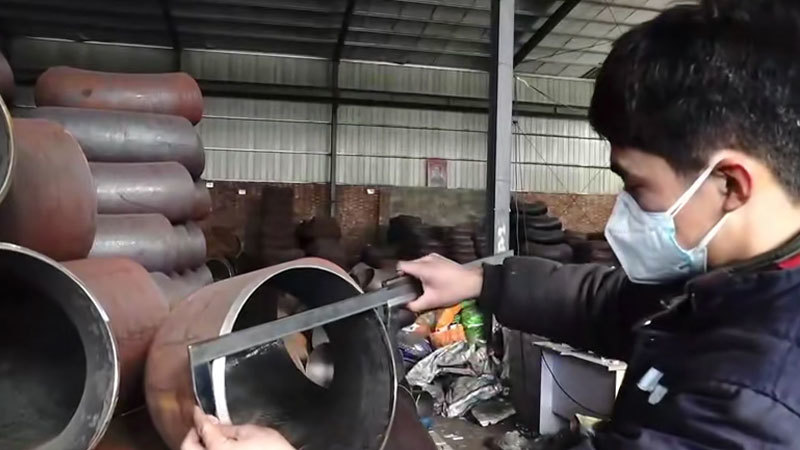
Image Source: unsplash
2026 Latest Specification & Size Reference for Pipe Reducers
Formal pipe reducer manufacturers offer full size ranges from 1/2 inch to 48 inch, with material options covering carbon steel, stainless steel, alloy steel, duplex steel and plastic. The table below compares key parameters of two common reducer types for reference:
| Parameter Dimension | Concentric Pipe Reducer | Eccentric Pipe Reducer |
|---|---|---|
| Applicable Scenario | Vertical pipelines, low pressure horizontal gas pipelines | Horizontal liquid pipelines, slurry transmission pipelines |
| Price Premium | 0% (base price) | 12-18% higher than concentric model |
| Pressure Loss | 12% lower than eccentric model | Slightly higher, no air accumulation risk |
| Installation Difficulty | Very low, no special alignment requirement | Medium, need to confirm the flat side direction |
2026 global petroleum and chemical equipment industry research shows that unqualified reducer selection causes 18% of unexpected pipeline shutdown incidents every year.
Key Factors to Consider Before Selecting a Suitable Pipe Reducer
Do not choose the cheapest reducer blindly, as unqualified products will bring huge hidden safety risks. 5 core factors need to be verified before procurement.
Q: How to confirm the pressure rating of the required pipe reducer?
You need to match the pressure class (150LB, 300LB, 600LB up to 2500LB) of the connected pipeline, and reserve at least 30% pressure margin for high impact working conditions such as water hammer.
Q: Can I use a welded pipe reducer for sanitary food processing pipelines?
Only electropolished full-weld stainless steel reducers that meet 3A sanitary standards are allowed, common industrial grade reducers have residual gaps that are easy to breed bacteria, which cannot meet food safety requirements.
Why Choose Oudi Pipe Fitting as Your Pipe Reducer Supplier
As a professional pipe fittings manufacturer verified by ISO and API, Oudi from www.odpipefitting.com provides 100% factory hydrostatic test before delivery, offers free custom drawing service, and can ship standard size pipe reducers within 7 working days to meet urgent project demand. In practice, our products have been exported to 32 countries and regions, and have passed on-site acceptance of more than 270 large industrial projects.
Frequently Asked Questions
Q: What is the maximum size of pipe reducer Oudi can produce?
A: Oudi can produce seamless pipe reducers up to 24 inch, and welded large diameter reducers up to 72 inch, fully customized according to your project drawing requirements.
Q: Can pipe reducers be used for high temperature steam pipelines?
A: Yes, you can choose alloy steel or 304/316 stainless steel pipe reducers that match the steam temperature and pressure rating, which can operate stably under 550℃ working conditions.
Q: What is the MOQ for custom non-standard pipe reducers?
A: Oudi supports 1 piece small batch custom production for special non-standard pipe reducers, no minimum order quantity limit to meet R&D and special project demand.
Q: How long is the warranty period for Oudi pipe reducers?
A: All Oudi pipe reducers offer 18 months full warranty from delivery date, we provide free replacement for any manufacturing quality related defects during the warranty period.
This article was generated by AI and is for reference only.
TAG:
Related Posts

April 15, 2025 Wednesday Guangzhou · Pazhou Complex


MESSAGES
We will contact you within one working day. Please pay attention to your email.

CEO : Leo Liu
International Dep: Lisa Sun